Key takeaways
- Mold needs moisture. Find and fix the moisture first.
- Common causes are clogged condensate drains, leaky ducts, wet crawl spaces and uninsulated ducts that sweat.
- Not every dark spot is mold, and not every musty smell is in the ducts.
- Porous materials such as wet insulation and flex duct usually need replacing.
How moisture gets in
In a humid climate, an air conditioner removes water from the air, and that water has to drain away. A clogged condensate drain, a cracked pan or a duct that sweats can leave surfaces wet for days. Leaky ducts in a damp crawl space can pull humid air into the system, and a roof leak or a bathroom fan that vents into the attic adds more.
Add dust to a damp surface and you have what mold needs.
What to look for
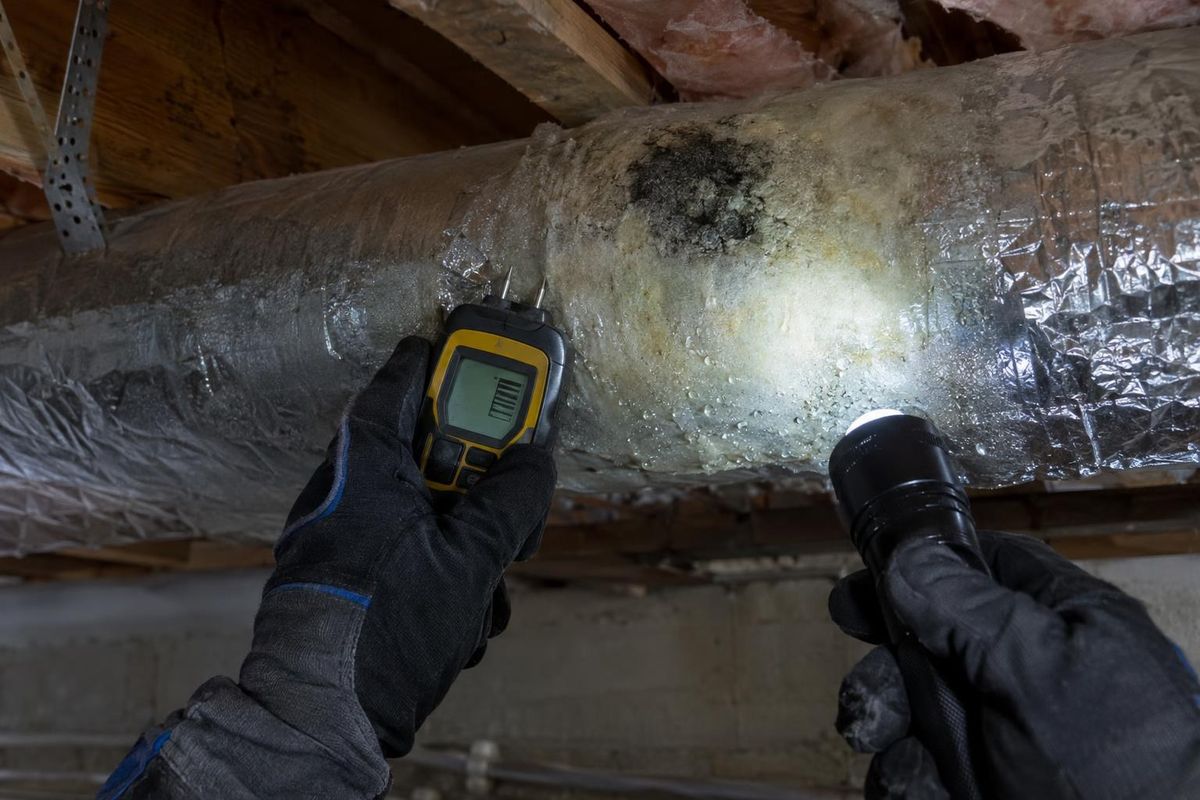
A musty smell when the system starts, visible dark spots on registers or ceilings near vents, water around the air handler, damp insulation on ducts and condensation on duct surfaces are signs. A camera and a moisture meter show what is actually going on.
Dust, soot and dirt can look like mold, which is why inspection and sampling are better than guessing.
What to do
Start with the cause: clear the drain, insulate sweating ducts, seal leaks, fix roof or plumbing problems and keep the humidity in the home in a comfortable range. Clean hard surfaces and replace porous materials that stayed wet. The U.S. EPA says that fixing the moisture problem is the key to controlling mold.
For small areas, careful cleaning may be enough. For larger problems, professional help is wise.
Prevention
Change filters, keep the coil and drain pan clean, insulate ducts in unconditioned spaces, use bath and kitchen exhaust fans that vent outdoors and consider a whole-home dehumidifier in damp climates. In Nashville's humid summers, these steps help keep the system dry.
An annual look at the system is a good habit.
Official sites to explore
Brand names and logos belong to their owners. These links open the official websites in a new tab, and we are not affiliated with them.
- U.S. EPA: MoldFederal information on mold, moisture control and cleanup.
- U.S. EPA: A Brief Guide to Mold, Moisture and Your HomeA plain guide to controlling moisture so mold does not take hold.
- U.S. EPA: Indoor Air QualityFederal information on the sources of indoor air pollution and how to reduce them.
- ENERGY STAR: DehumidifiersInformation on choosing efficient dehumidifiers.
Quick answers
Can mold in ducts make me sick?
Mold can be a concern for some people. A doctor can advise on symptoms, and we can inspect and fix the home side.
How do I know if it is mold?
We inspect and, if needed, take samples. You cannot always tell by looking.
Will cleaning stop it for good?
Only if the moisture is fixed. Otherwise it can return.