Key takeaways
- Smooth metal duct is recommended. Plastic and foil accordion duct are not.
- Longer runs and more elbows reduce airflow, and makers and codes limit the total length.
- A dryer must vent outdoors, not into an attic, crawl space or garage.
- Screws that poke into the duct catch lint, so clamps and foil tape are preferred.
The right material
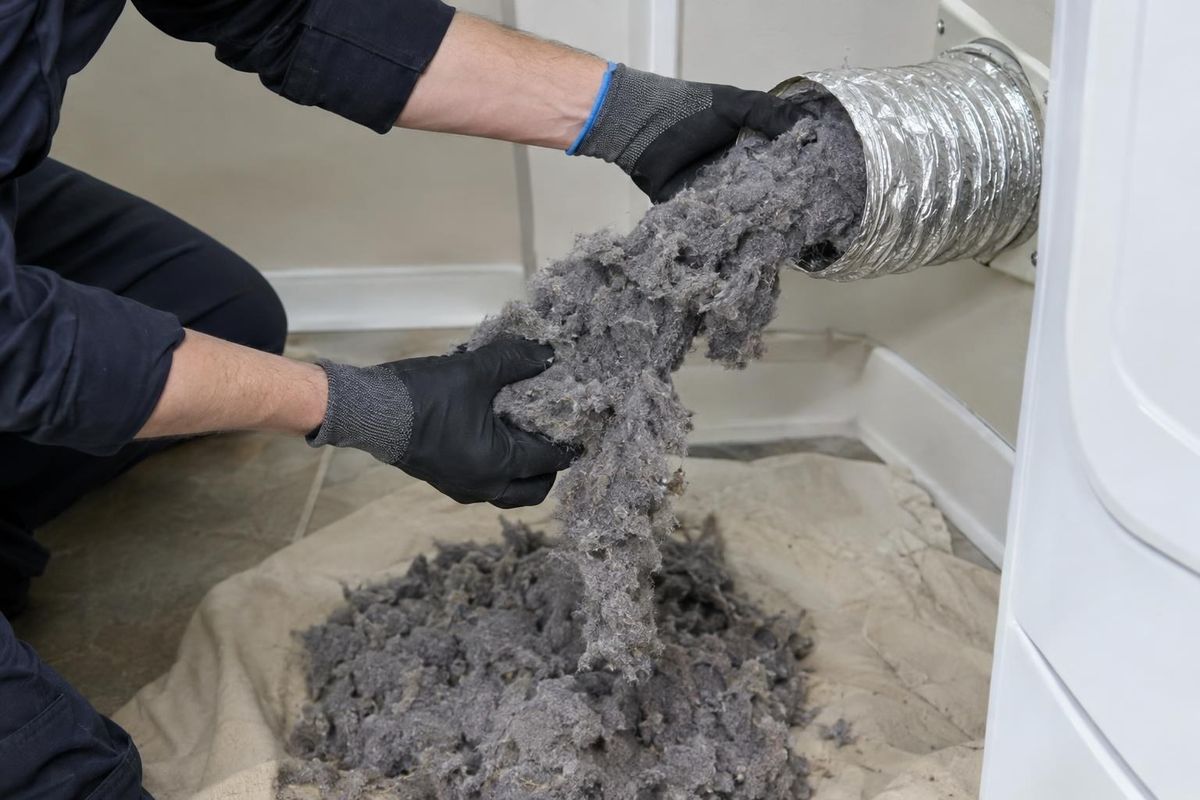
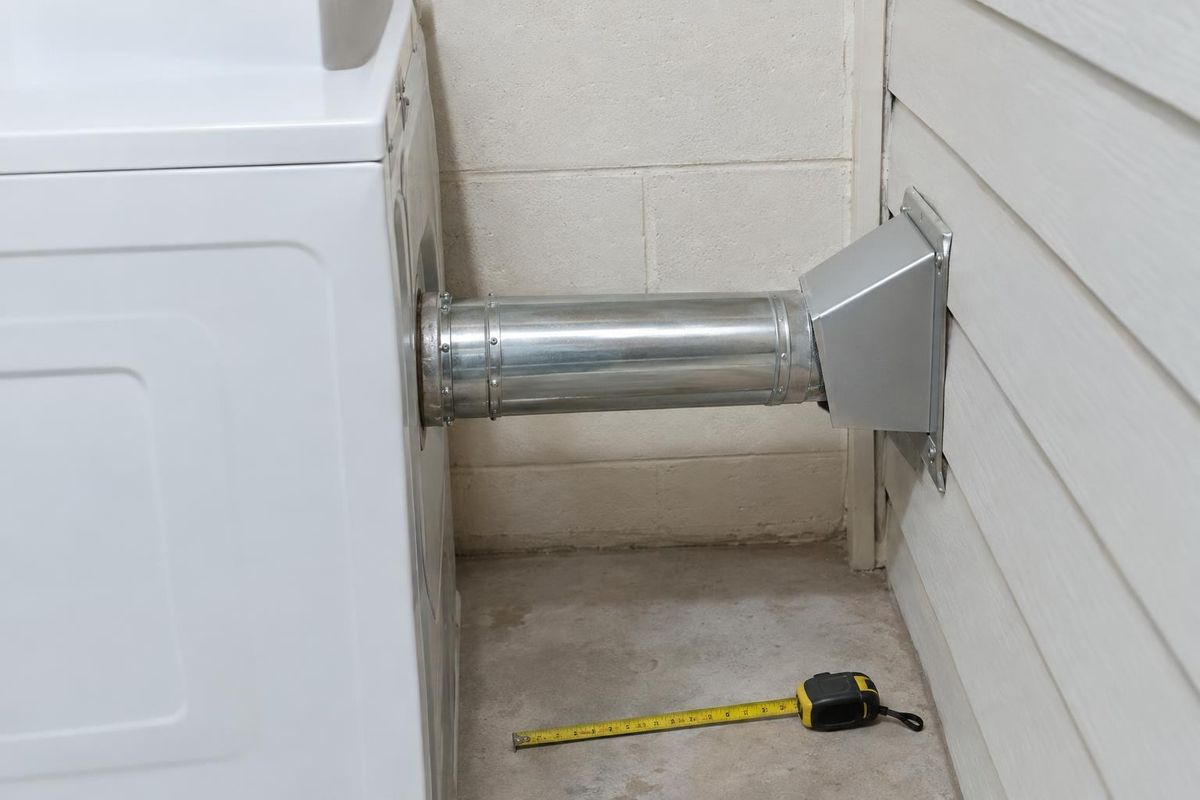
Rigid metal duct has a smooth wall, so lint slides through instead of snagging. Semi-rigid metal duct is acceptable for short connections where space is tight. Thin foil accordion duct and plastic duct have ridges that trap lint, and they can crush, tear or burn, which is why many codes and makers do not allow them.
The short connection between the dryer and the wall is called the transition duct. It should be as short as possible, made of metal and kept free of kinks.
How long can the run be
Dryer makers set a maximum length for the vent, and building codes usually follow them. Many codes use a limit of about thirty-five feet, with an allowance subtracted for each elbow, because every bend slows the air and collects lint. Your dryer's manual gives the exact number for your model.
If your run is longer, or has several turns, rerouting it shorter or adding a booster fan may help. A camera inspection can tell us where the air is losing speed.
Where the vent ends
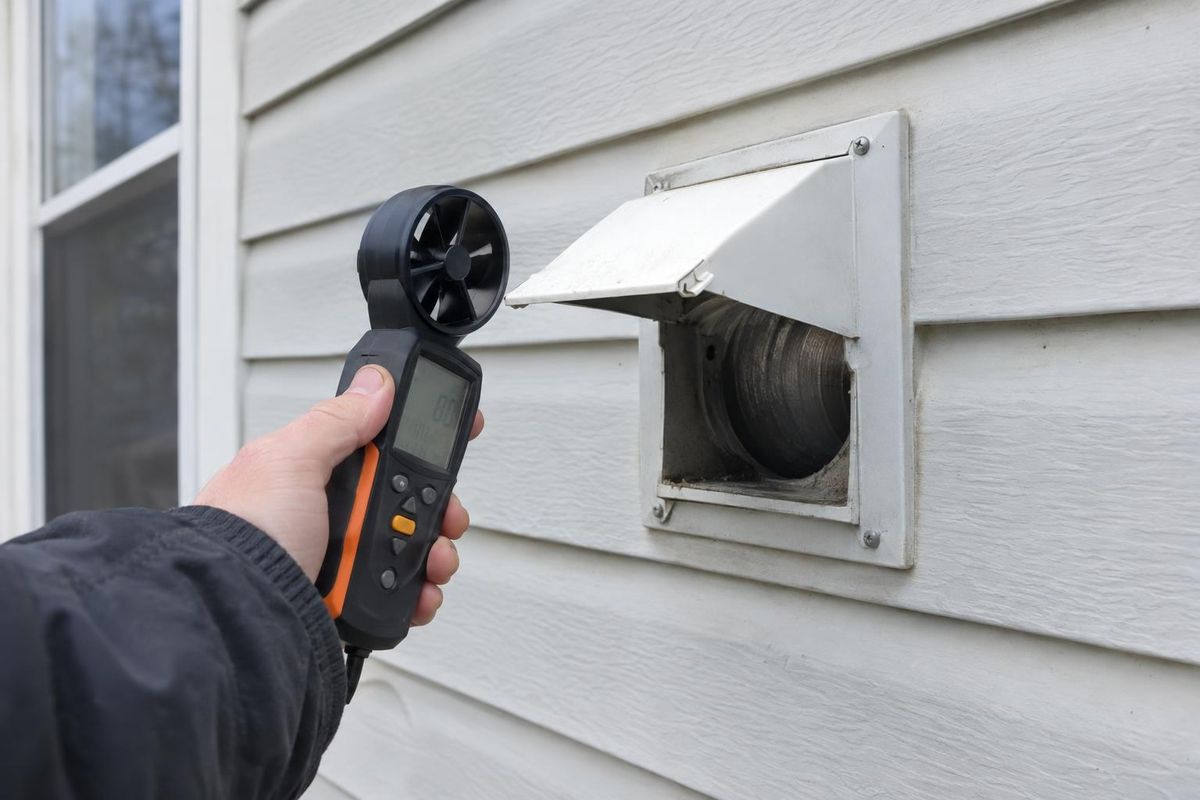
A dryer vent must end outdoors, with a hood that has a damper to keep out weather and animals. It should not end in an attic, a crawl space, a garage or under a deck, because hot, moist, lint-filled air causes damage and is a hazard. Avoid screens on the end, which clog quickly.
The outside hood should be kept clear of bushes, snow and nests, and it should be easy to reach for cleaning.
Joints, clamps and tape
Joints should be tight and sealed with foil tape or clamps made for duct. Sheet metal screws that poke into the duct catch lint and start a clog. The duct should slope slightly toward the outside, where possible, so moisture drains out.
If you are not sure whether your vent meets these basics, an inspection will tell you. Your local codes office can answer questions about local requirements.
Official sites to explore
Brand names and logos belong to their owners. These links open the official websites in a new tab, and we are not affiliated with them.
- Metro Nashville Codes DepartmentPermits and inspections for Davidson County.
- NFPA: Home Fire SafetyFire safety education for homes, including appliance and heating safety.
- ENERGY STAR: Clothes DryersInformation on efficient clothes dryers.
- U.S. Fire Administration: Home FiresFederal information on preventing home fires.
Quick answers
Is flexible foil duct okay?
It is not recommended. Smooth metal is safer and easier to keep clean.
Can two dryers share a vent?
Generally not. Each dryer should have its own vent, with some exceptions in commercial systems.
How do I find my dryer's maximum vent length?
Check the installation instructions for your model. They list the limit and the allowance for bends.