Key takeaways
- A filter that fits and is changed on time matters more than the highest rating.
- Very restrictive filters can choke airflow in systems that were not designed for them.
- Thicker media filters last longer and often catch more.
- Pets, dust and construction shorten the time between changes.
What a filter does
A filter protects the equipment first and the air second. It catches the dust and hair that would otherwise coat the coil and the blower, which keeps the system running well. It also catches some of the particles that float through the house.
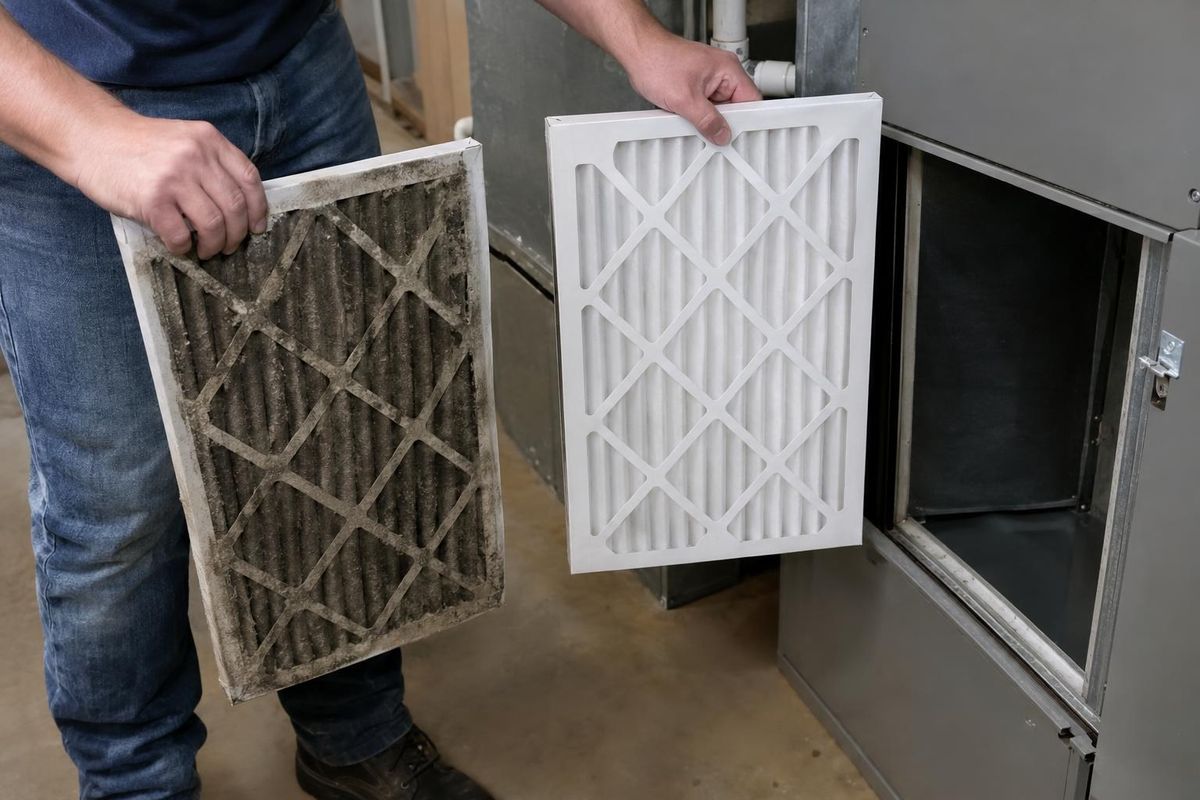
A filter that is too dirty restricts the air, makes the system work harder and can lead to weak airflow, ice on the coil and higher bills.
Sizes and fit
The size is printed on the edge of your current filter, such as sixteen by twenty-five by one inches. Use that exact size. A filter that is too small leaves gaps that let dust flow around it, and a loose fit defeats the purpose.
Check that the arrow points the way the air flows, toward the blower and away from the return.
Ratings
Most filters carry a MERV rating, a number that shows how well they catch smaller particles. Higher numbers catch more, but they also restrict airflow more. Many home systems do well with a mid-range rating, and some are designed for thicker media filters with higher ratings.
If you want better filtration, ask first. A thicker media filter cabinet can catch more without choking the system, and we can advise.
How often to change
A one-inch filter is often changed every one to three months, and sooner in a house with pets, smokers, a lot of dust or a recent renovation. Thicker media filters may last six months to a year. Set a reminder, or ask us about a filter routine.
Check the filter monthly at first. If it looks gray and clogged, it is time, and you will learn how fast your home loads it.
Official sites to explore
Brand names and logos belong to their owners. These links open the official websites in a new tab, and we are not affiliated with them.
- U.S. EPA: Guide to Air Cleaners in the HomeHow air cleaners and filters work and what they can and cannot do.
- U.S. EPA: Improving Indoor Air QualityPractical steps for controlling sources, ventilating and cleaning the air.
- U.S. EPA: Indoor Air QualityFederal information on the sources of indoor air pollution and how to reduce them.
- ENERGY STAR: Ventilating FansInformation on efficient bathroom and whole-house ventilating fans.
Quick answers
Is a higher MERV always better?
No. It must suit the system. Too high a rating can restrict airflow.
Can I wash a filter?
Only filters made to be washed. Disposable filters should be replaced.
Why is my filter dirty so quickly?
Dust, pets, leaks in the return and dirty ducts can all load a filter fast. We can help find the cause.